Jul 1, 2025 / 7 min read
Organizational systems
Transformative Journey
In an era of rapid technological advancement, particularly with the rise of AI, the need for adaptable and high-performing teams is paramount. This article chronicles my ongoing…

As a science graduate, I’m always impressed by the beauty of nature.
AI & Democracy
In an era of rapid technological advancement, particularly with the rise of AI, the need for adaptable and high-performing teams is paramount. This article chronicles my ongoing journey to transform team dynamics and organizational structures, focusing on practical strategies to foster continuous improvement and achieve measurable business outcomes. From rethinking traditional ceremonies to driving a business-oriented mindset, I aim to share actionable insights that empower teams to thrive in a constantly evolving landscape.
I was waiting for something extraordinary to happen, but as the years wasted on, nothing ever did unless I caused it.— Charles Bukowski
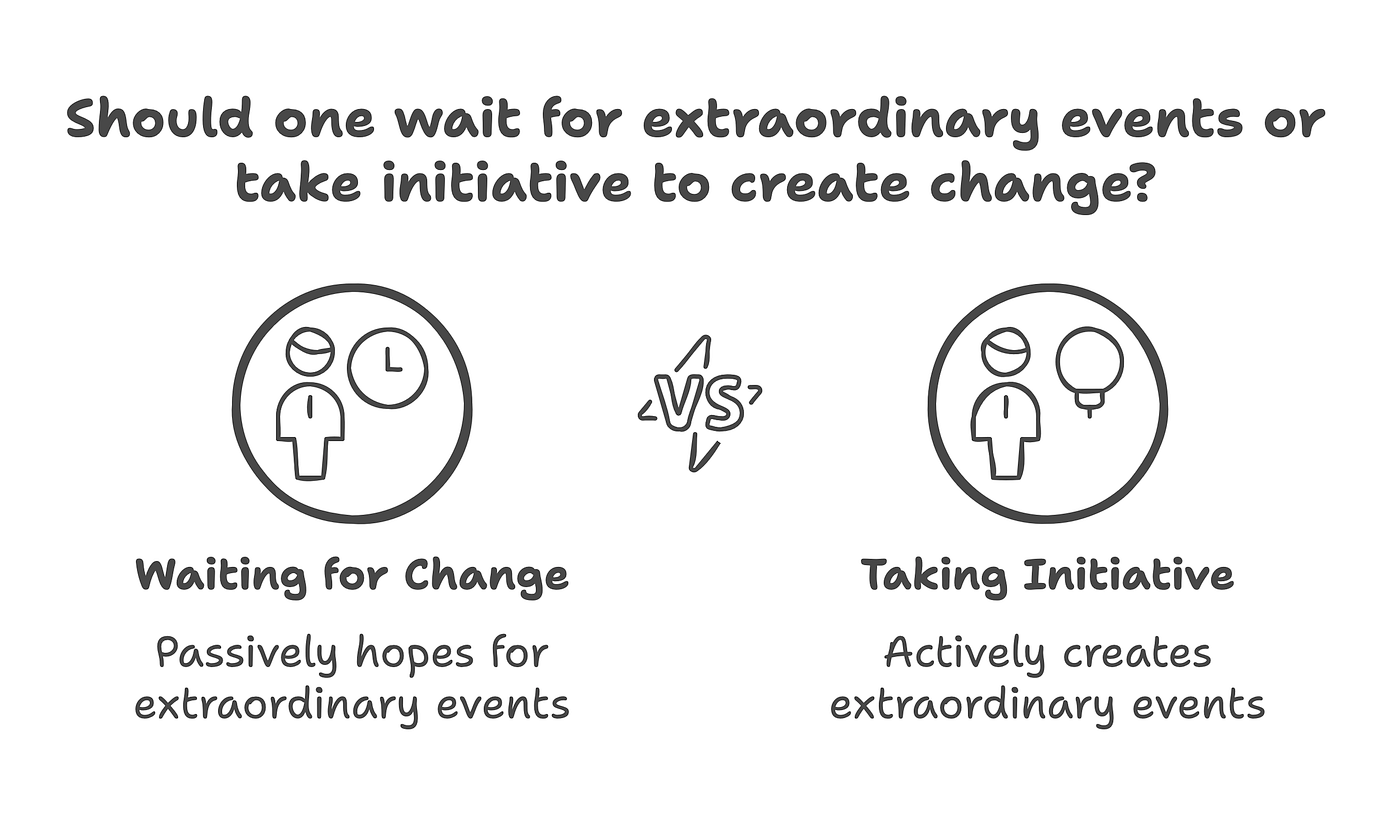
One of my colleagues asked me the reason behind these posts. I had a simple answer: to validate my insights in the long term. I’m confident that these changes will prove effective, and I’m focused on implementing them, regardless of immediate external validation. I prioritize actions that I know will be beneficial in the long run, even if they’re not immediately popular. I am less concerned with the opinions of those who aren’t invested in progress, and more focused on driving meaningful change.
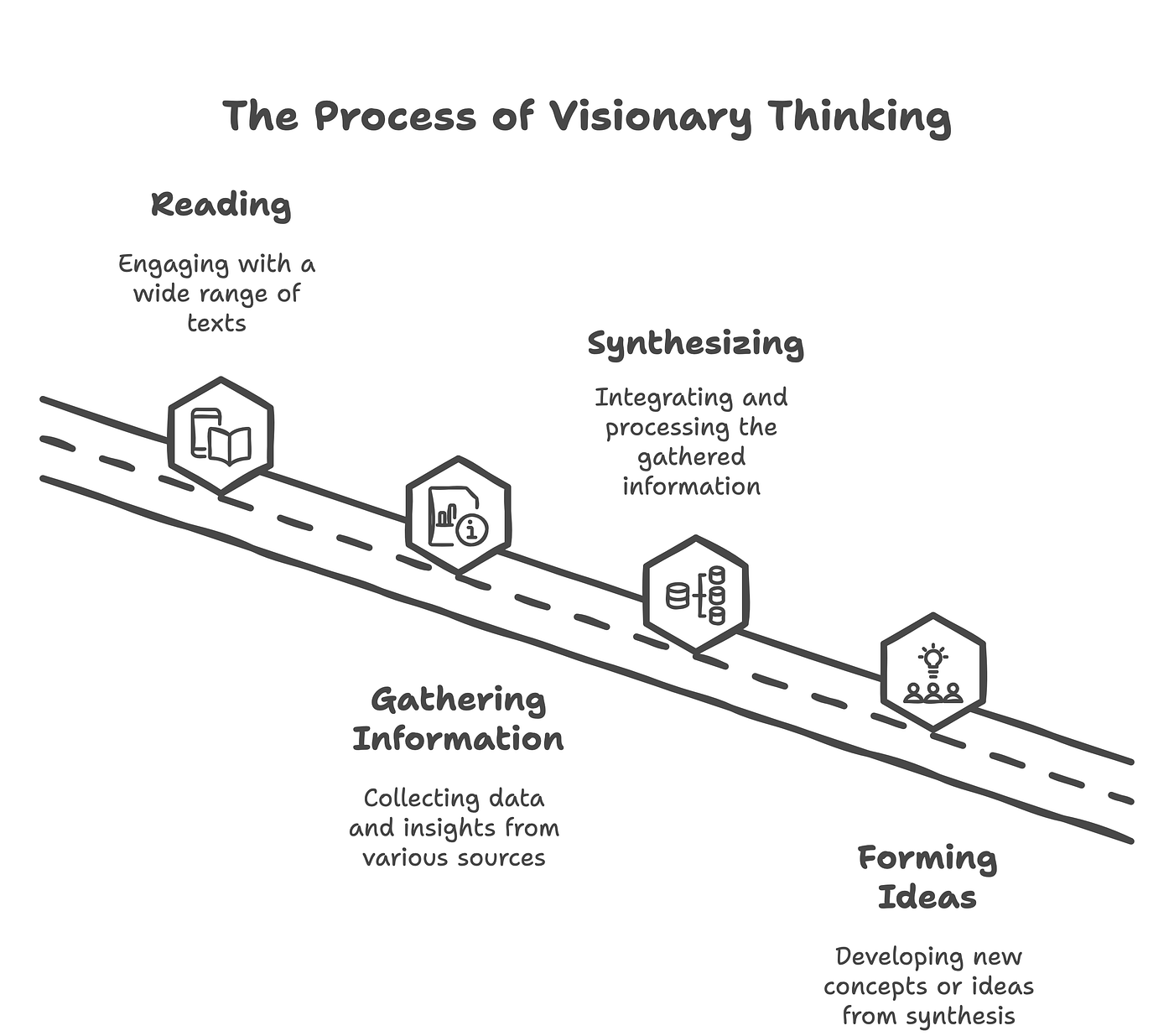
The common trait of people who supposedly have vision is that they spend a lot of time reading and gathering information, and then they synthesize it until they come up with an idea.— Fred Smith
Getting Started
To drive meaningful change, one must synthesize information and develop a clear vision. As Fred Smith observed, “The common trait of people who supposedly have vision is that they spend a lot of time reading and gathering information, and then they synthesize it until they come up with an idea.” This principle applies directly to my approach to product leadership, where I believe focusing on the growth of people is as crucial as the growth of the product itself.
Rethinking Team Ceremonies
Since I started my last journey, I keep changing ceremonies to find the sweet spots in team dynamics. The first action was to cancel all ceremonies, and block all the morning time slots for the team, and me, then re-create ceremonies. This brings flexibility to meet the team when necessary rather than waiting next week appointment. This also helps me to focus on my daily work. Because meetings suck my energy, and randomly planned meetings in a day make me more tired. I’m not able to deep focus between meetings marathon. Generally speaking, I keep all my periodic meetings afternoon between 1–3pm, and the rest is reserved for spontaneous sessions. This works very well, and I give the team maximum amount of uninterrupted time for their work.
Improving Retro Ceremonies
To optimize our retro process, we implemented the following changes:
- Weekly Review: We conduct a weekly review to assess overall progress and ensure everyone experiences the new habits.
- Focus on Habit Formation: Recognizing that habit change takes time, we prioritize creating a model that works for everyone, regardless of their individual adaptation speed.
- Closure Upon Success: Once a new habit is successfully formed, we close the corresponding retro action item.
By shifting from a traditional, infrequent retro to a more continuous and iterative approach, we’ve accelerated habit formation, and ultimately improved team performance.
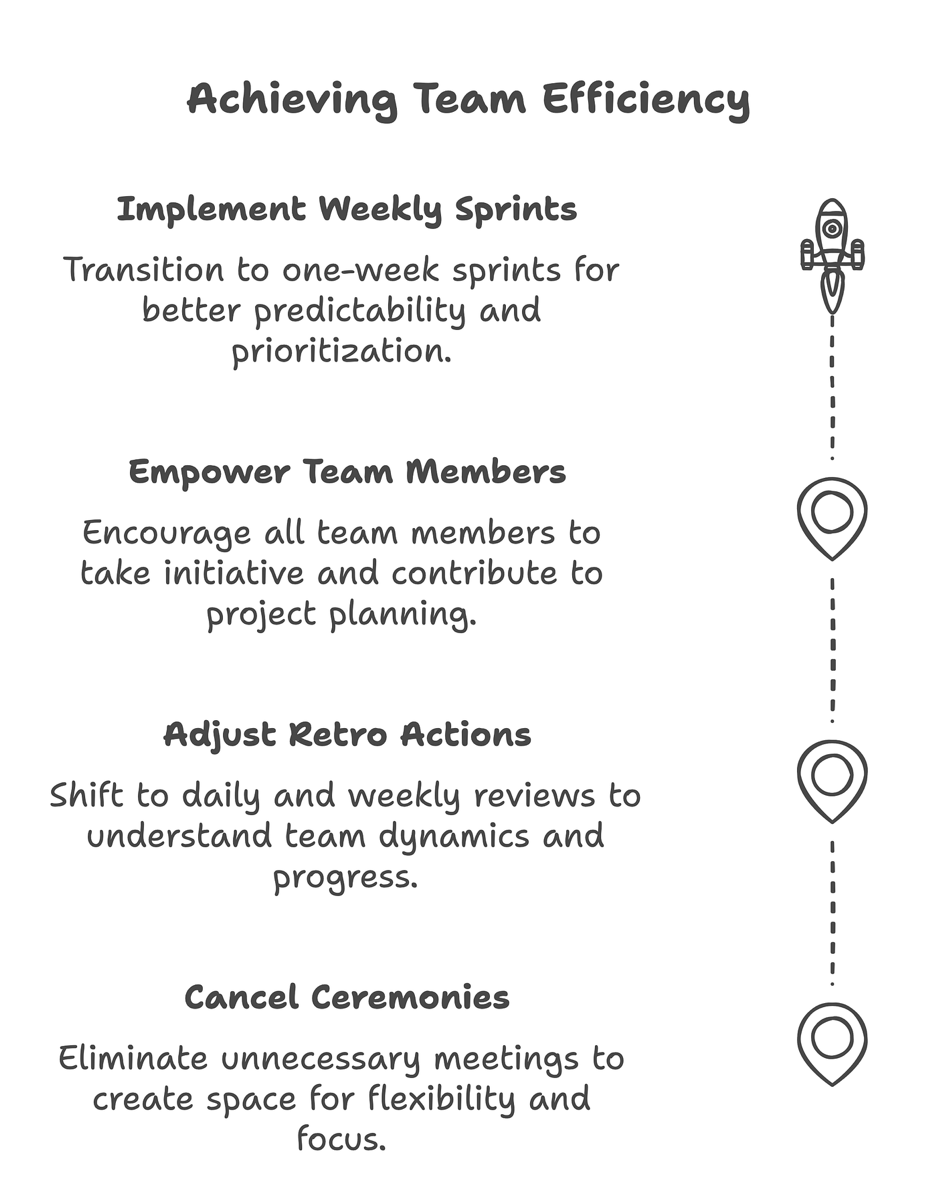
If you watch Real Madrid, almost all players are able to shot and score. If you want to win, that’s fundamental. You can’t just expect your strikers to score. Of course, every player has different strength and weaknesses, but in the end, they all need to be more or less good at common football standards. Software development is the same. You can’t sit there and expect that your work will find you. You need to step up, scope the deliverable, and dispatch it to the team members for execution. This is what we also achieved, today all our team members are able to step up, scope the deliverable, and dispatch it. To be able to speed up this process, we also switched to 1-week sprint. We no longer have grooming, refinement ceremonies. Beside daily standup, there is only planning meeting. Every week, we know what we need to work on now, and what’s next. Someone from the team already prepared the story with product and designer colleagues, designed the solution, and explain it in the planning. We do ruthless prioritization for weekly sprint. This change made us more predictable.
Besides the noble art of getting things done, there is the noble art of leaving things undone. The wisdom of life consists in the elimination of non-essentials.— Lin Yutang
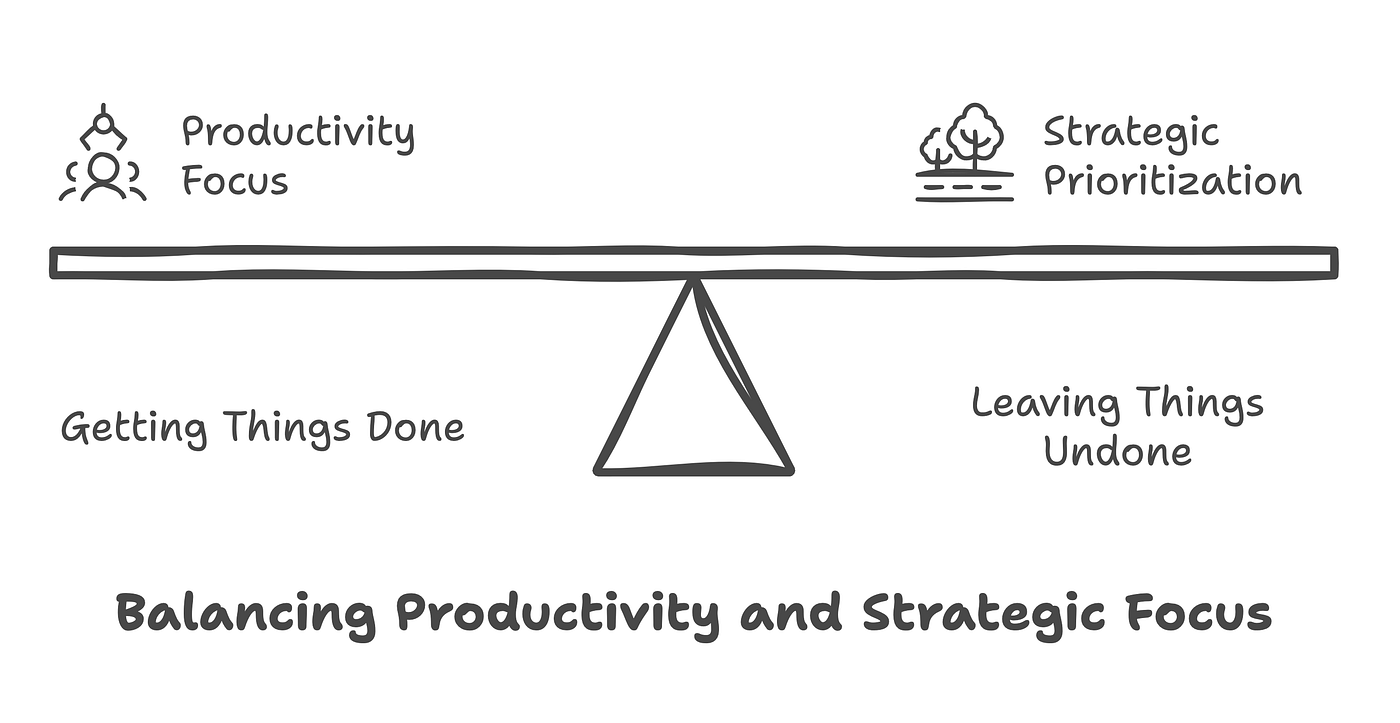
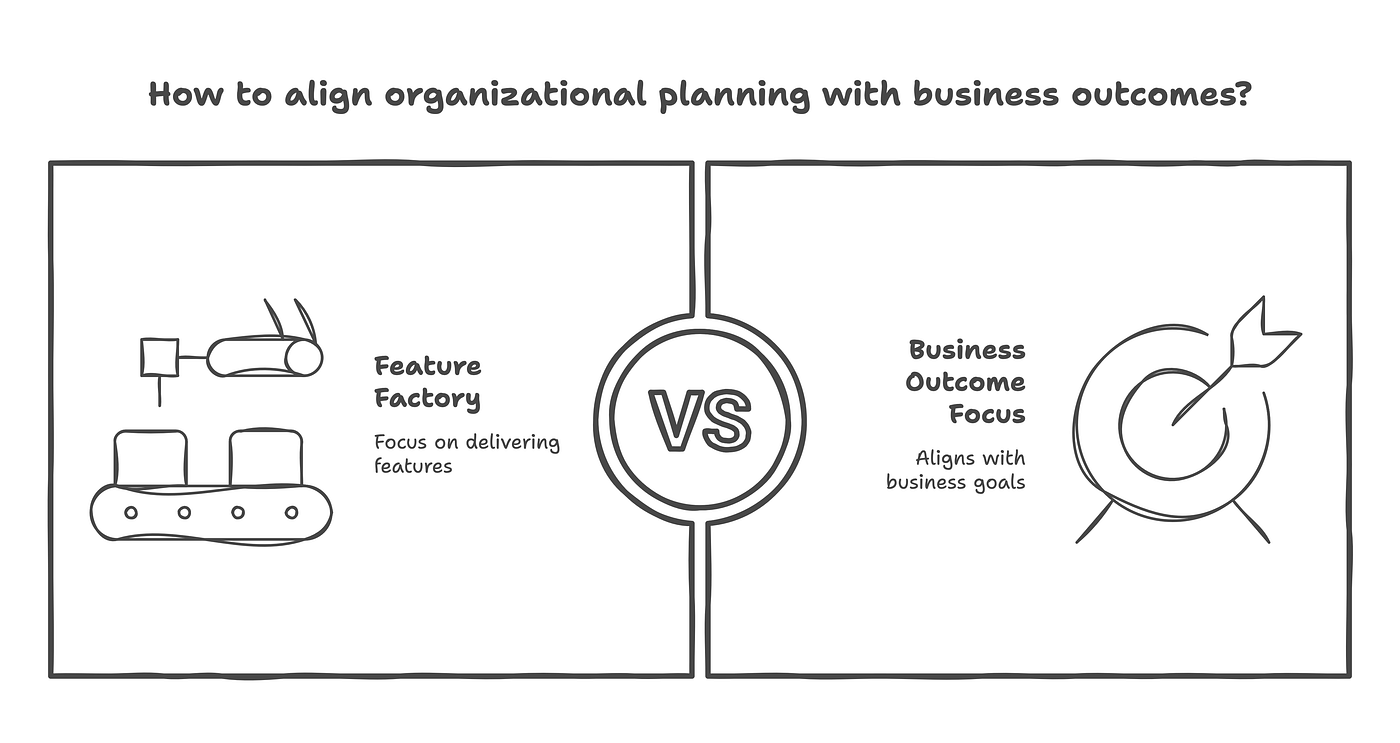
Looking ahead, I’m driving our organization towards a more agile and outcome-focused planning cycle. We’re transitioning from quarterly planning to 6-week cycles, directly tied to key business objectives. This shift aims to move away from a ‘feature factory’ mentality and cultivate a business-oriented mindset across all stakeholders. By the end of this year, my goal is to see every team member integrating financial considerations into their project proposals. Specifically, I anticipate that by demonstrating the tangible business impact of our work, we will be able to move away from relying on story points and potentially streamlining our sprint cycles. This will allow us to focus on the value delivered, rather than the velocity of development.
The rapid evolution of AI and automation is reshaping the employment landscape, demanding a workforce that is adaptable and continuously learning. The changes I’m implementing within my team — focusing on rapid iteration, skill development, and a business-outcome-driven mindset — are not just about improving team performance. They’re about preparing individuals for a future where adaptability is paramount. By empowering team members to proactively identify and solve problems, learn new skills, and understand the business impact of their work, we are building a foundation for them to thrive in an increasingly AI-driven world. This proactive approach to upskilling and organizational agility is, I believe, a critical component of addressing the challenges posed by the evolving nature of work.
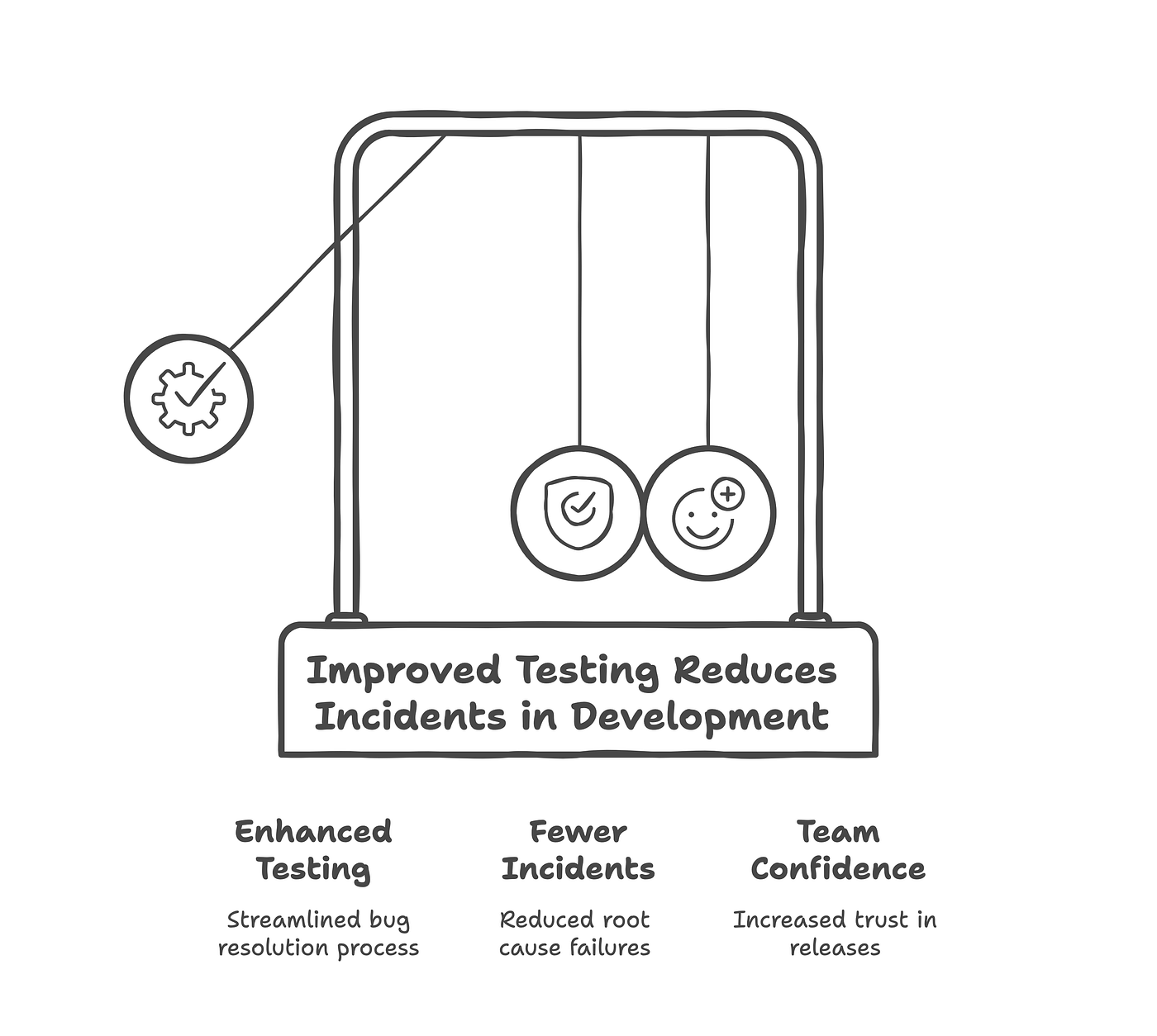
We also had bugs and incidents, change was causing failures or bugs. I used pie charts to show everyone how much time we are spending for whom. We are working on ticket X today, because Y. Y is the stakeholder e.g. product, customer, team, regulations. Once data speaks, I don’t need to say more. The team was consuming a really good amount of time to solve bugs, and/or taking actions for incidents. We solved this with special retros for refinement, code reviews, definition of done, end-to-end testing etc. Today, we see the name of our team in 2% of the root cause of incidents. This was a great achievement. Everyone is able to sleep without getting worried about an incident. We still don’t deploy on Fridays to avoid ruining the weekend, but as soon as we gain more confidence and trust in our testing, we will be able to release anything anytime, ideally by also incorporating feature flags.
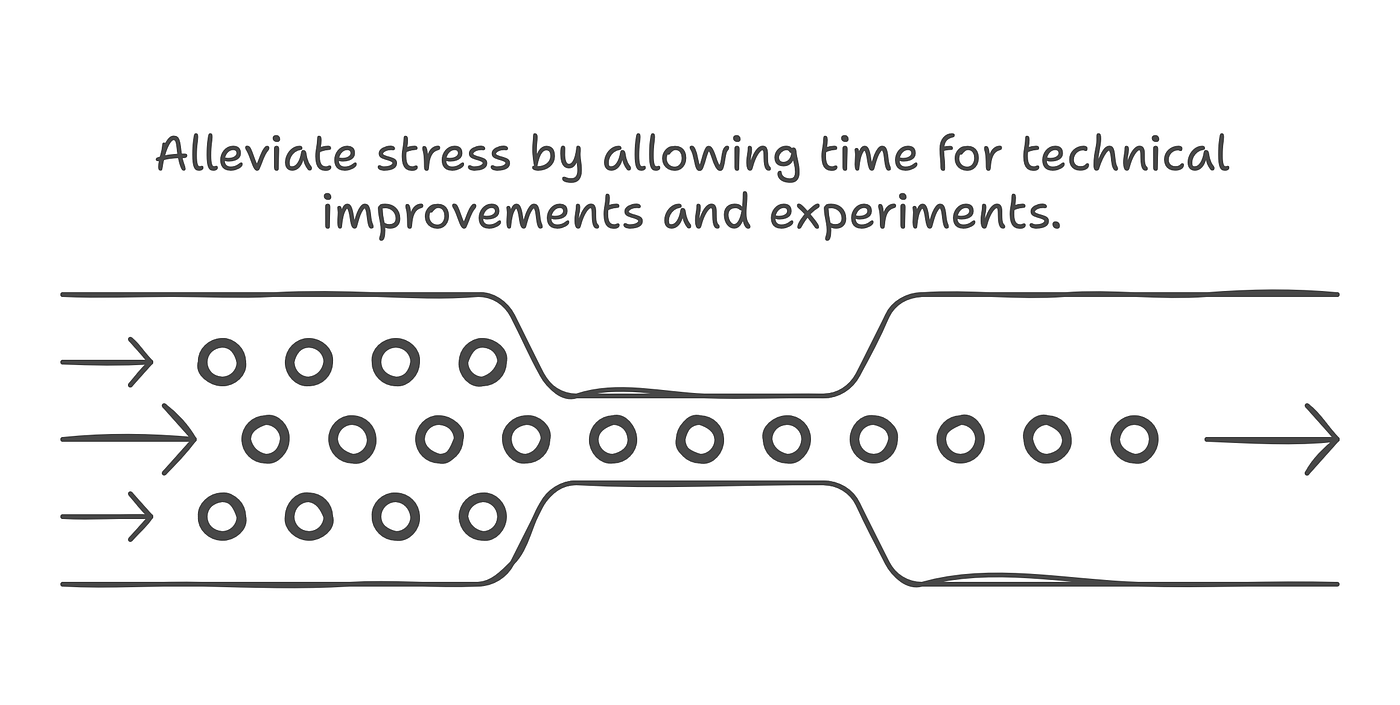
Since data has spoken, and we get stronger in managing relationships with stakeholders, I decided to give every 4th 1-week sprint to the development team. It’s completely up to the team on what to do. This could be technical debt, covering security concerns, experiments of new technologies, completing tests, documentations etc. This 25% dedication might look so much, but it’s necessary. Because they are getting stressed to deliver product increments in 3 weeks. This also has a good contribution to the product roadmap. As long as the customer is manageable, their needs are addressed to the product roadmap. As long as product is the ultimate responsible person for product roadmap, things will get structured, and work like a well oiled machine. The expectation here is not to have any technical concerns while running for product increments. So they know that there will be a time for them, they don’t need to worry.
While the journey for our original team has reached its conclusion, the transformation it ignited is only just beginning. We successfully cultivated a space where individuals could evolve into empowered, outcome-driven leaders. Now, as they step into new domains across the wider organization, they carry that experience with them, not as a memory, but as a mandate for change. They are the vanguards of our next evolution, equipped to lead in an AI-driven landscape because they have learned to value adaptability above all. The goal was always to build people, not just a team, and their new mission is the ultimate validation of that success.