Sep 1, 2023 / 3 min read
Strategy discipline
The Learning Cycle: Adapting in a Changing World
My professional journey involves aiding companies in crafting beloved products, necessitating substantial interactions, empathy, and attentive listening. My footprint spans the…
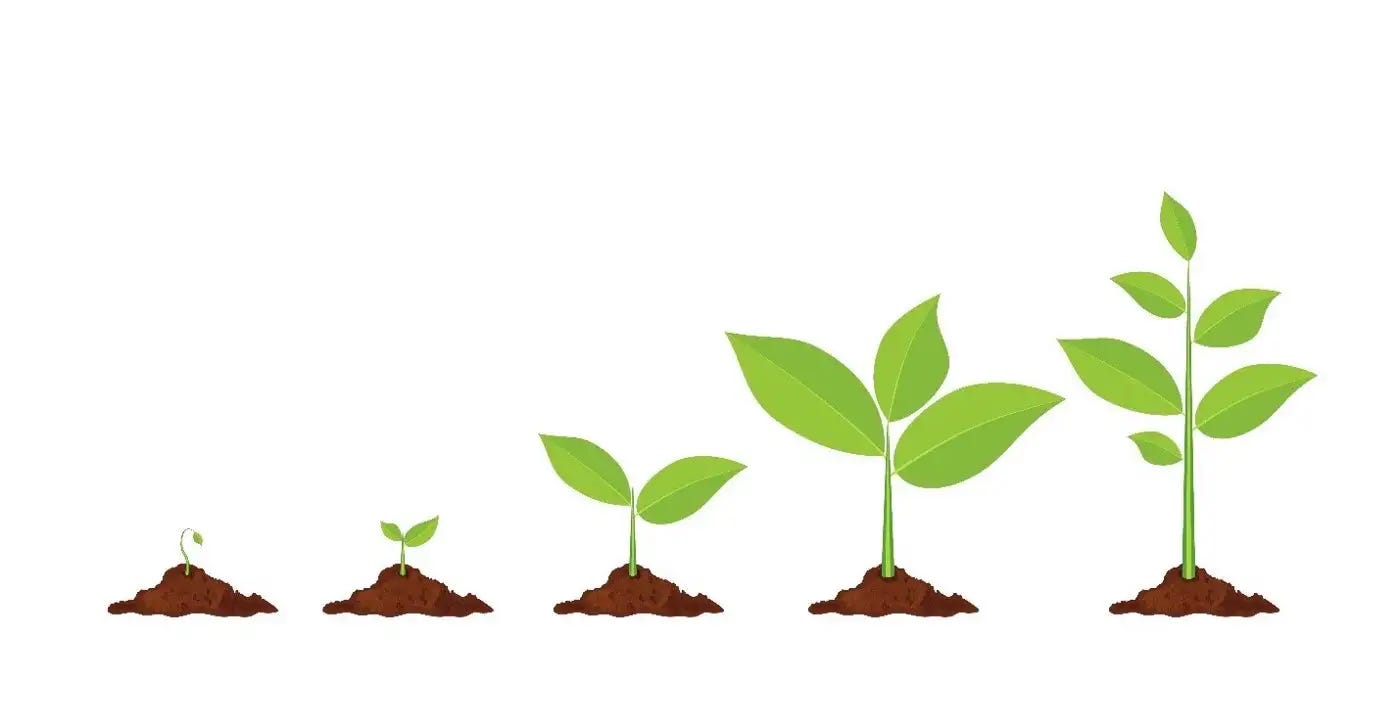
As a science graduate, I’m always impressed by the beauty of nature…
Background
My professional journey involves aiding companies in crafting beloved products, necessitating substantial interactions, empathy, and attentive listening. My footprint spans the telecommunications, marketing, and DevOps industries. Now, my focus lies on leaving an indelible mark within the publishing sector. My diverse industry experiences since graduation have underscored the variations in factors like target user groups and comprehension levels. These experiences have propelled me into embracing the concept of the learning cycle…
Physics Insights
To set the stage for the subsequent section, let’s consider the example of gravity. On Earth, a free-falling object accelerates at 9.8 m/s downward. This scientific principle, akin to art, remains a constant under the same circumstances. Harnessing this principle, we can develop ideas. For instance, determining the depth of a water well can be achieved by dropping an object and timing its splash. This timing, multiplied by 9.8 (or rounded to 10), provides the depth.
All truths are context-dependent. When distancing from Earth, gravity decreases due to higher gravitational force near the inner core. The universal law of gravitation explains this as:
- F: gravitational force between objects.
- G: gravitational constant
- m1 and m2: masses of objects.
- r: distance between object centers
As you move away from Earth, “r” increases, weakening gravity due to the squared denominator. Consequently, higher altitudes or space yield lower gravitational pull. For instance, the International Space Station orbits at an altitude (420 km) where gravity’s influence is diminished, creating weightlessness.
Learning Cycle
Learning is an intrinsic facet of life, occurring naturally or through training. However, our swiftly flowing temporal reality means much of our acquired knowledge isn’t timeless. Some truths are scientifically unchanging, while most learned things possess contextual dependencies.
Like gravity, knowledge has contextual validity. Insights from one company (A) might apply to another (B), but aren’t absolute truths. Moreover, learnings from company A at time t+3 might be obsolete at t+6, owing to time’s influence.
Engaging in conversations, I actively listen, allowing updates to my mental models based on current insights. Differing temporal understanding can lead to conflicts. To counter this, learning, unlearning, and relearning are pivotal.
Syncing with Time
Modern times necessitate alignment with data-driven insights. The world’s data-driven optimization mandates speaking with data.
Failure to sync with time brings two scenarios: soft and hard changes. Generational shifts highlight this; past norms don’t apply. Gradual adaptation prevents obsolescence, contrasting starkly with abrupt changes.
Charlie Munger encapsulates the advantage of consistent intelligence over raw brilliance:
It is remarkable how much long-term advantage people like us have gotten by trying to be consistently not stupid, instead of trying to be very intelligent.
For instance, within the telecommunications sector, diverse communication protocols are employed to execute tasks such as SMS delivery and charging. These protocols undergo updates and occasional complete overhauls, with new communication protocols taking their place. I recall a time when the camel protocol was prevalent, but subsequently, the industry transitioned towards adopting the diameter protocol. This shift underscores the peril of clinging solely to established knowledge, as failing to adapt can lead to obsolescence.
Evolving Product Roles
Innovators like us hold a unique responsibility — shaping the environment’s future. Focusing on transforming lives via gradual, periodic changes is key. Initiating early communication, and fostering openness for soft, incremental changes, is paramount.
In the end, embracing change positions us to thrive, lest we become obsolete. Remember, it’s better to initiate change earlier than be forced into it.