Feb 18, 2024 / 6 min read
Systems essays
The Hidden Cost of Poor Communication
Before we really dive into the details, I need to mention that I’m actively engaged with many different people, observed many different occasions, and managed to extract some…

As a science graduate, I’m always impressed by the beauty of nature.
Communication
Before we really dive into the details, I need to mention that I’m actively engaged with many different people, observed many different occasions, and managed to extract some findings through years of experience. Often we get used to living in a situation where things are complicated, but we are also exposed to it so many times, that’s why we think it’s normal. It’s not that easy to step back, and look at the situation from a different perspective all the time. As I have a lot of background experience from telecommunications, I learned how communication works by soft and hard way.
Internet Protocols
We know internet protocols from the technological advancements. They describe the way two devices or services should talk to each other. It’s similar to our natural conversational skills.

When someone says “Hello”, the message is encoded in codec which can be understood by someone who can exchange the codec info. In this case, it’s English. Then the brain translates it, and gets the message. To be able to understand how communication works, definitely have a look at SIP protocol, which is technically explained on RFC 2543. Every step in a SIP based communication returns an exit code. For example,
- 180 Ringing, person receives the message
- 200 OK, acknowledges that message is received
- 486 Busy, person is talking to someone at the moment
- and, many more.
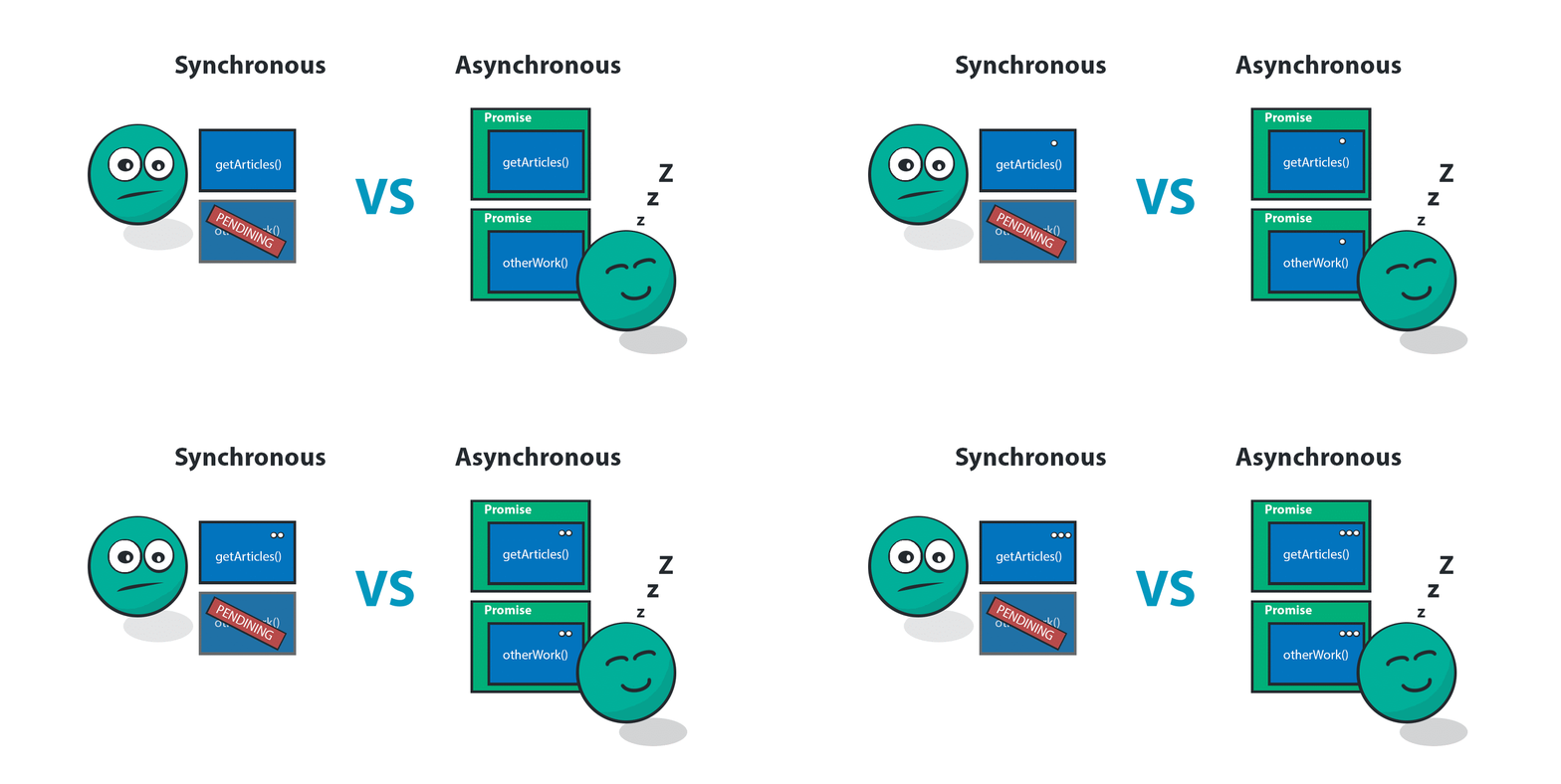
Sync and Async Communication
Synchronous Communication
is communication that happens in “real time” — when two or more parties exchange information in the same moment as each other. Examples are
- in person meetings
- phone calls
Asynchronous communication
is any type of communication that includes a lag between when someone sends the message, and when the party receiving the message interprets it. Examples are
- Text messaging
How to choose?
Choose Sync, if the meeting topic requires a lot of dialogue, or if the next scheduled company-wide meeting is too far away and your message can’t wait.
Choose sync, if you need your audience to raise concerns, ask questions, brainstorm ideas, and generally collaborate on action items in response to your message.
Choose sync, when there’s no room for lag time, perhaps due to a major outage impacting your customers, or any other crisis that demands immediate attention.
Choose sync, if the topic is complex, and you can’t sum it up in a couple of sentences, and you need immediate input or feedback from your message recipients. You may want to check they’ve understood the nuance of the topic and respond to their query.

How?
We evolved to work in real-time, but the future is asynchronous. We can also learn how to communicate async from event driven architecture. In EDA, messaging queues are heavily used to process messages one by one. Here are 3 common ways adapted in organizations.
Topic: General
Let’s create a general channel on Slack where everyone can post something. Can you communicate here, really? No way. It’s going to be a mess. Imagine 300 people in the organization trying to asynchronously talk to each other here. They won’t be able to find their messages, and the responses to their message.
Topic: Group
Some people start complaining because of processing unnecessary amount of messages to find some relevant ones. Then start collecting people about a specific topic to easily exchange. This is the most frequent communication pattern today.
Topic: 1–1
A few days later, people also start exchanging in one to one. Most people still don’t need to know everything, so it’s understandable to keep some communication in 1–1.
Message Body
Message body, what you expect the other party to understand, is important during communication. If it’s big, consumption of the message on the other side takes time. Isn’t it similar to human communication? When someone talks for a few minutes, and asks your opinion, isn’t it generally too late to process all the message, translate, and generate output? Yes, it is. Because someone can touch many points, tell a lot of things, and no way to generate an output with a simple answer. So we learn to communicate in smaller chunks.
That’s why the technical term bandwidth also applies to human communication. For example, when customer wants to have high quality audio in telecommunication solutions, we inform that high quality audio requires a lot of bandwidth, more instances to handle the load, processing power, and a licence. This is the reason why almost everyone hates hearing their voice on phones. This is similar to human communication. When people communicate in advanced use of a language, it makes communication harder. Ideally I stick to A1–2 level of language which can be understood at first without repeating with anyone, either business or tech or whoever. Use of this level of language also creates curiosity and engagement. So it helps both sides to think as simple as possible, and come up with meaningful conclusions.
Of course, each person has different characteristics. Some people are smart, and able to connect what you said now with what you said 3 or 30 days ago. Some people are really difficult, I worked with those people. I had to repeat the entire scope every time to add something. They don’t even remember what I talked about 1 hour ago. Those people are super hard to work with. To be honest, I don’t know how to handle this case.
Especially in product development, to be able to ease the understanding, we somehow need to learn how developers communicate and work. One of the SOLID principles might be helpful here. S refers to single-responsibility principle. It means,
a class should have one and only one reason to change, meaning that a class should have only one job.
Similar to it, in our communication,
- Message should have only one meaning,
- Reader understands the message,
- Reader understands it at first read,
- Reader answers it.
Top Skills for Leaders
As a leader, you need to assess how good is your communication. Because it’s one of the most important leadership skill today.
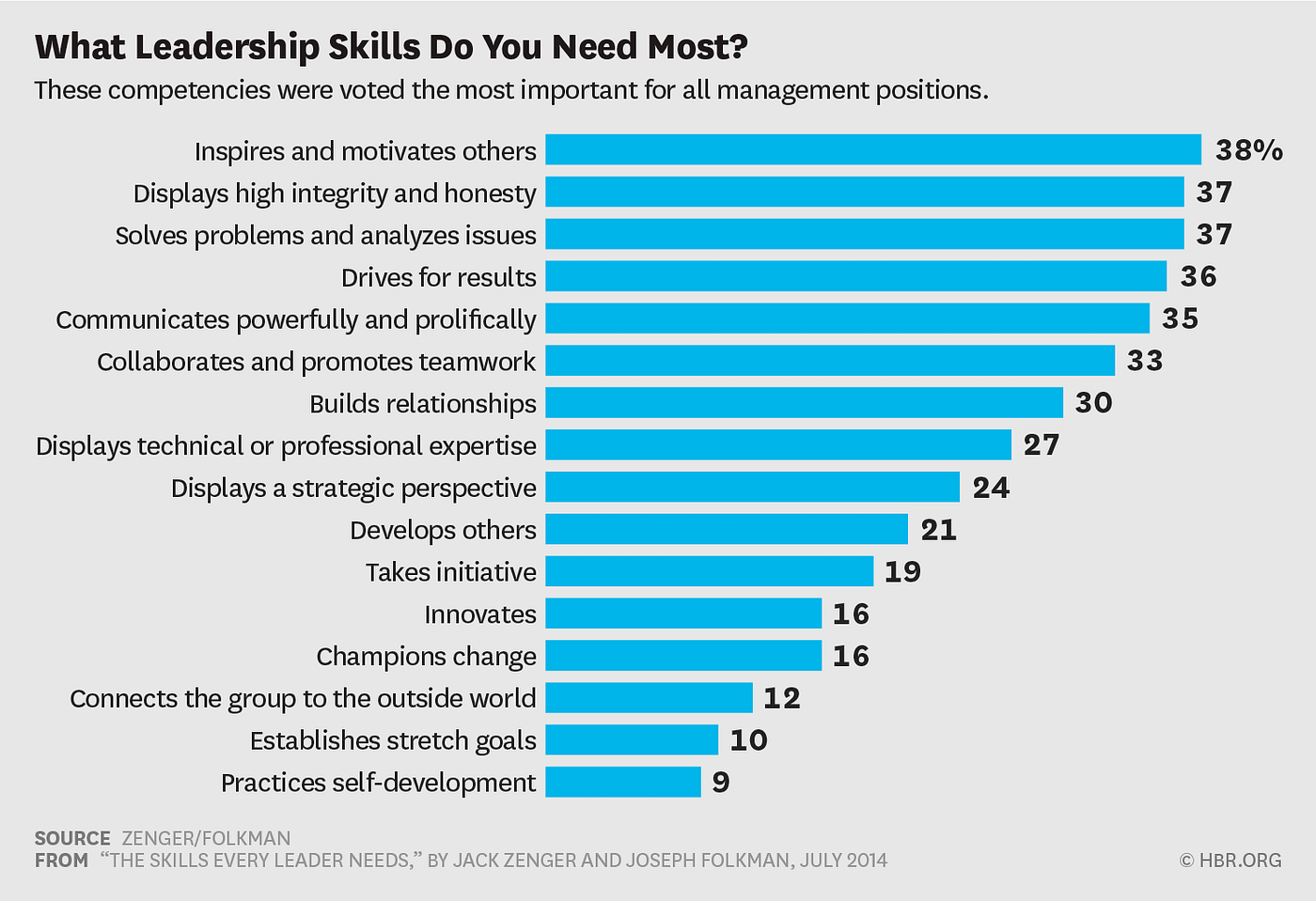
When a leader talks, it should be inspiring, and motivating. Now ask yourself, e.g. when I talk,
- Do I inspire and motivate people?
- Do I show integrity and honesty?
- Do I develop others?
Depending on roles, change the questions. As a leader, it’s good to have an assessment of these competencies. Because they are the things that exactly make you a leader or manager or nothing.
Invisible cost of Communication Failures
Be careful, sometimes it’s better to think 2 minutes more before sending a message. Because communication failure has a cost!
- When employees understand their overall role in the business, 91% will work towards that success, but the number plummets to 23% if they don’t. (Bill Quirke, Melcrum) https://www.amazon.de/-/en/Bill-Quirke/dp/0566087804
- According to a study by Towers Watson, companies with highly effective communication practices have a 47% higher total return to shareholders compared to companies with poor communication practices. https://www.forbes.com/sites/robertsher/2014/07/17/never-leave-internal-communications-to-chance-in-midsized-companies/
- A recent SMB Communications Study reported that the cumulative cost per worker per year due to productivity losses resulting from communication barriers is $26,041. So depending on how many workers your company has, that cost could be in the hundreds of thousands. And it’s estimated that a business with 100 employees spends an average downtime of 17 hours a week clarifying communication. That downtime translates to an annual cost of $2,604,100. https://www.sisinternational.com/smb-communications-pain-study-white-paper-uncovering-the-hidden-cost-of-communications-barriers-and-latency/
In summary, leaders can incur significant costs to their organizations when they ignore the cost of communication. This is not the only affect, other variables are also affected, e.g. employee satisfaction. Organizations should constantly try easing the communication, avoid crowded meetings, empower individuals to delegate the work. Leadership would often like to set up metrics to monitor the performance of teams, but they fail to set up one for themselves.