Feb 13, 2026 / 7 min read
AI systems
The Dark Age of Software
AI and Roman concrete: Facing a Software Dark Age? Explore the shift to probabilistic code and the rise of the Meaning Architect.
As a science graduate, I’m always impressed by the beauty of nature.
Since my graduation in 2015, I’ve been involved in developing various software products across different sectors, and I’ve had the chance to talk to thousands of people about their own experiences. I can confidently say that I know global software development standards quite well. In such a world, after working deterministically for 10 years, the emergence of AI and the pressure to shift from deterministic workflows to probabilistic ones feels terrifyingly foreign yet equally intriguing.
Let me give you a simple example to make it clear. Our old way of working required us to develop robust algorithms. Think of a set of numbers; we had sorting algorithms like selection sort, bubble sort, or merge sort that we were certain would produce the correct result every single time, no matter what. Today, the picture we face is more like this:

In this new era, we are dealing with a “black box.” We operate under the assumption that this box is equipped with the semantic formulas of the universe. This is exactly where things get weird: at the concept of “assumption.” Because now, 100% certainty has turned into a question mark. Having worked deterministically for years, I believe this “black box” principle must be experienced with extreme caution. Imagine wanting to cancel an order, but the AI interprets it as a request to cancel your entire account.
I am naturally someone who follows trends, but when it comes to adaptation, I hit the brakes. If you want to change something that already works, you must have very good reasons. Think of it this way: you cannot simply wake up one morning and replace South American suppliers with Asian ones for a product manufactured in Europe. This risks the entire supply chain, affects production lines, and could shake the global economy. If you think “what’s that to me?”, imagine waking up to find your phone inaccessible, or going to an ATM and being unable to withdraw cash.
History Repeats Itself: Lost Progressions
Humanity has reached this point through constant progress. But has it never moved backward? It absolutely has. Certain advancements were lost to time, only to be reinvented centuries later.
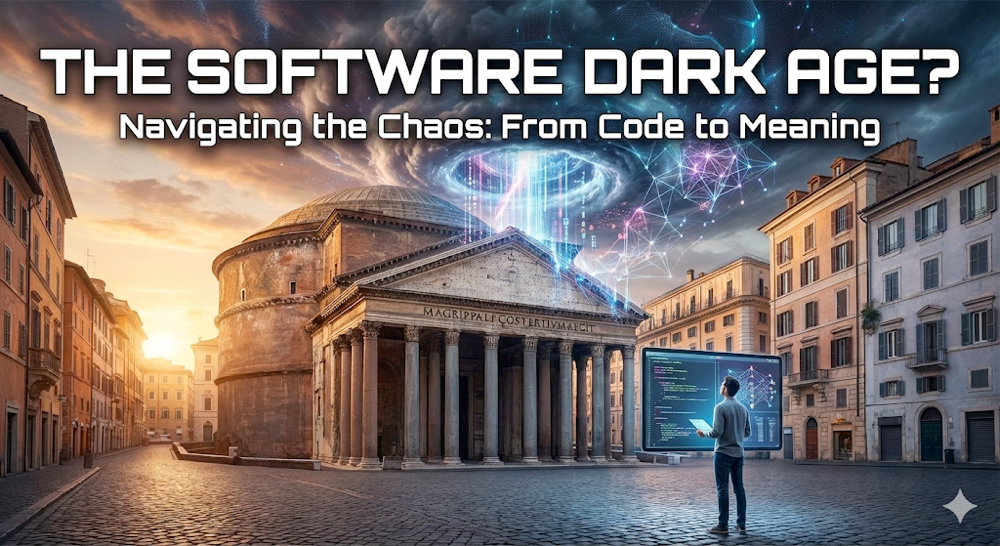
Take the Romans, for instance. They discovered a concrete formula so advanced that it allowed them to build the dome of the Pantheon (which still stands today) and durable underwater harbors. When the Roman Empire collapsed, that formula vanished from history. While Medieval Europe struggled to simply stack stones, this resilient concrete technology was only “rediscovered” in its modern sense during the 18th and 19th centuries. Roman concrete was significantly more durable than modern concrete and possessed self-healing properties; we have only recently begun to approach this technological level in laboratories.
Another example is the Antikythera Mechanism. Discovered in a shipwreck in 1901, this device is an “astronomical computer” dating back to 150–100 B.C. It used bronze gears to calculate planetary positions and eclipses. Such a level of mechanical engineering was not seen again in the Western world until the emergence of mechanical clocks in the 14th century. That is a gap of nearly 1,500 years.
If the Romans “knew” concrete but lost it because they couldn’t fully formalize the “why” behind it, could we be entering a “Software Dark Age” if we rely on AI models and forget the underlying algorithmic foundations?
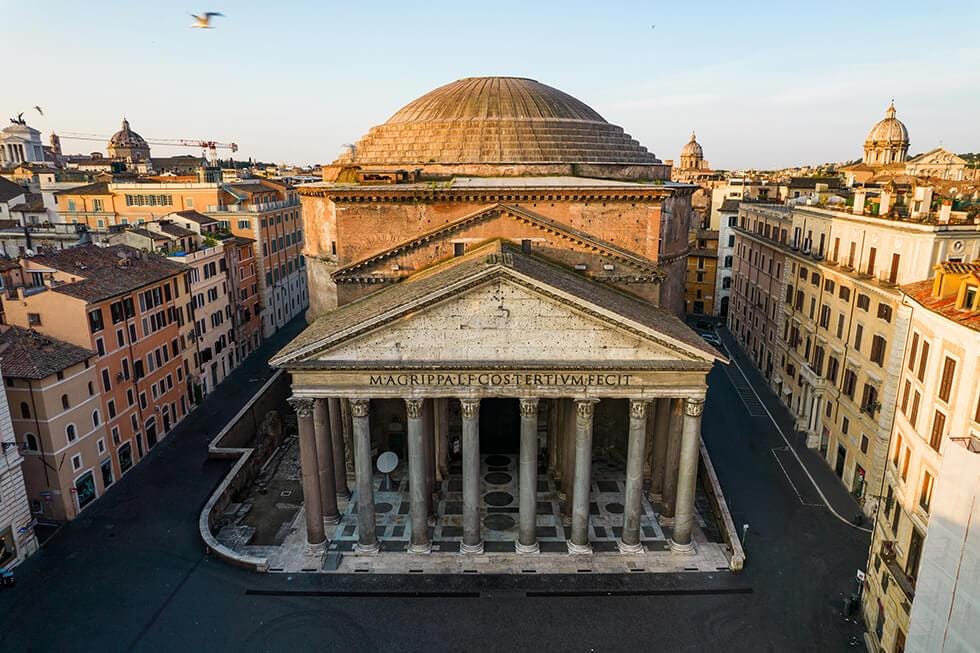
Roman concrete was significantly more durable than modern concrete and possessed self-healing properties; we have only recently begun to approach this ‘technological level’ again in laboratory environments over the past few years.
The Mathematical Fog and the Vanishing “Why”
So, if it’s so risky, why is the whole world diving headfirst into this probabilistic sea? The answer lies in the fact that we have hit the limits of determinism. For a decade, we solved the “certain” with our perfect algorithms, but we always left the “uncertain” outside. Human language, emotions, or the complex layers of meaning within a photo: these never quite fit into an if-else block.
We aren’t actually giving up on certainty; we are trying to control the massive chaos that certainty couldn’t reach. Instead of dictating “how to do it” through step-by-step instructions, we are now telling computers “what we want” (Intent). This brings the risk of Intellectual Atrophy.
In the past, everything was defined by . The input was known, the output was known, and most importantly, we wrote the function (f) ourselves, line by line. Today, the equation has evolved:
We still have an x and a y, but the function in the middle is now a “mathematical fog” consisting of billions of parameters. We no longer write the function; we “hope” the correlation it finds is correct. If we stop asking “why” and only care about the “result,” we risk stripping away our identity as software engineers and becoming mere operators of a complex system.
AI captivates us because of the massive illusion of convenience it offers. But this charm shouldn’t lead to complacency. In probabilistic systems, error is not an exception; it is the nature of the system. We used to be the masters of information; now, we are observers waiting for that information to wash ashore correctly in a sea of probabilities.
We used to focus on cloud modernization, application modernization, cybersecurity threats, and migration projects; now, AI has entered the stage. However, AI is not just another item added to our to-do list: it is a massive layer of complexity superimposed on all these existing processes. While cloud migration transformed our infrastructure and app modernization reshaped our architecture, AI shakes the very core of our work, which is the way we derive meaning from data. It is no longer enough to just keep the systems running. Now, we must also manage the security and logical integrity of the probabilistic decisions made within those systems.
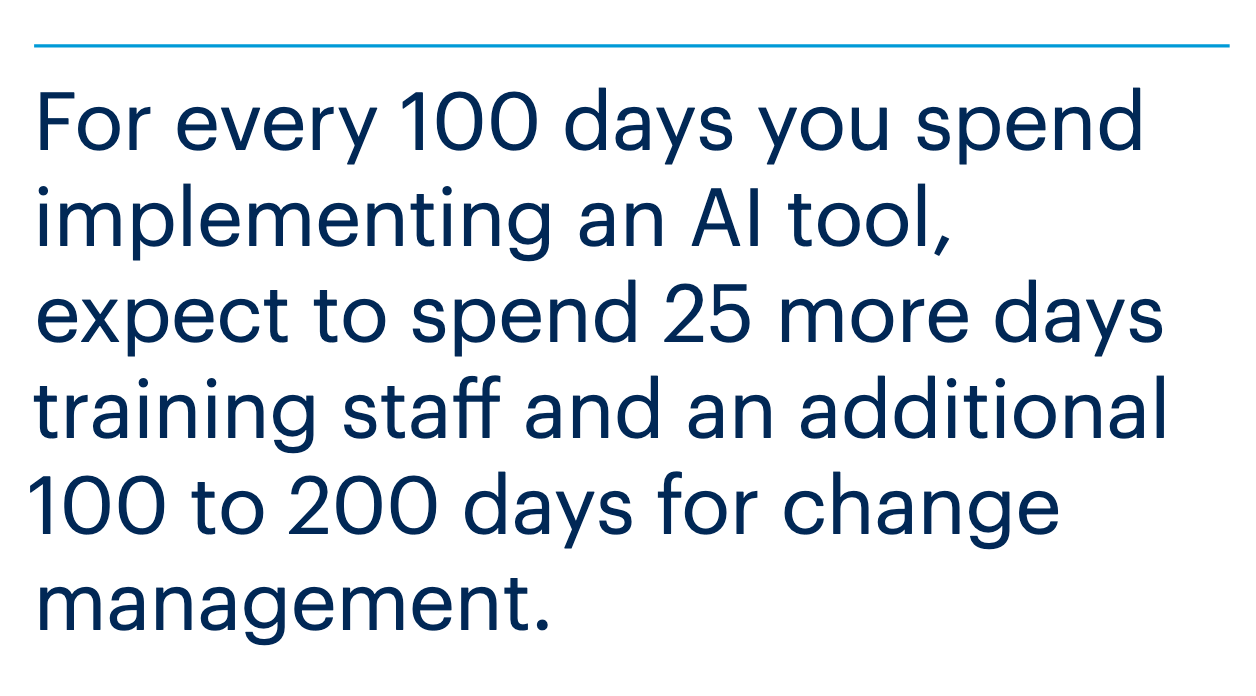
At this point, it is crucial to realize that technical implementation is just the tip of the iceberg. Gartner data reveals that the real cost in this new world lies in people and adaptation rather than just software. For every 100 days you spend implementing an AI tool, you must expect to spend an additional 25 days for staff training and a staggering 100 to 200 days for change management. If we ignore this human and operational process and focus only on technical speed, we will find ourselves opening the gates to the “Software Dark Age” mentioned earlier. For a true Meaning Architect, the real work begins not when the code runs, but when the resulting change is safely managed.
A New Definition of Value: Algorithmic Guardianship
Gartner’s strategic predictions for 2026, the year we are currently living in, show that the decline in critical thinking skills due to AI usage is pushing 50% of global organizations to require specialized “AI-free” skill assessments. As automation accelerates, the ability to think independently and creatively has become both increasingly rare and increasingly valuable.
This “loss of critical thinking” is paving the way for a new elite class. If the majority turns into “prompt operators” who accept black box outputs without question, the minority who understands the underlying mathematics, logic, and historical context will become the true Guardians of the system. In this new era, value will consolidate into three competencies:
- Logical Sanity Checking: Filtering the “logical-looking but flawed” (hallucinated) outputs of AI through a deterministic lens.
- System Architecture and Integration: Orchestrating how functions flow within a massive system without breaking one another.
- Meaning Architecture: Telling the AI not just “what” to do, but “why” it needs to do it with strategic depth.
A New Approach: Disciplining Probability
Instead of just watching the risk of a Software Dark Age unfold, I am building a new workspace that hybrids deterministic discipline with the massive capacity of AI. This platform gives thoughts a Spatial Architecture rather than just dropping them into lines of text.
The core logic of this system is to prevent “context bloat” and noisy information, which are the biggest problems with current AI, by allowing us to investigate every idea in its own “Isolated Cell.” Instead of entrusting information to an uncontrolled black box, we carry probabilistic noise on a deterministic skeleton where every branch of thought can be audited through logic.
In this platform, we position AI not as a source of chaos, but as an unshakeable part of the strategy we build. By dividing ideas into independent nodes, we refine each within its own reality and only transfer verified, meaningful data to the main document.
This tool is more than just a software project for me; it is the first concrete step toward assuming the role of Algorithmic Guardianship and transitioning from a passive operator to an active Meaning Architect. Instead of drifting in a sea of probabilities, we are rebuilding our harbor with that ancient and robust “concrete formula.”