Aug 24, 2025 / 4 min read
Strategy discipline
Software Economics 301
We began our study (101) by learning to identify the components of an ecosystem. We then advanced (201) to understanding the strategic interplay between those components. In this…

As a science graduate, I’m always impressed by the beauty of nature.
Navigating Macro Tides with Capex and Opex
We began our study (101) by learning to identify the components of an ecosystem. We then advanced (201) to understanding the strategic interplay between those components. In this course, we zoom out to acknowledge a greater truth: every ecosystem, no matter how well-managed, is subject to the vast, powerful, and often unpredictable forces of the external climate — the macroeconomic weather.
A company’s internal decisions on Capital and Operational Expenditures are not made in a vacuum. They are direct responses to the prevailing economic climate. The role of a leader, therefore, evolves beyond that of an architect or ecologist. In this advanced study, the leader must become a meteorologist, interpreting external signals to navigate their company through seasons of boom and bust, drought and flood.
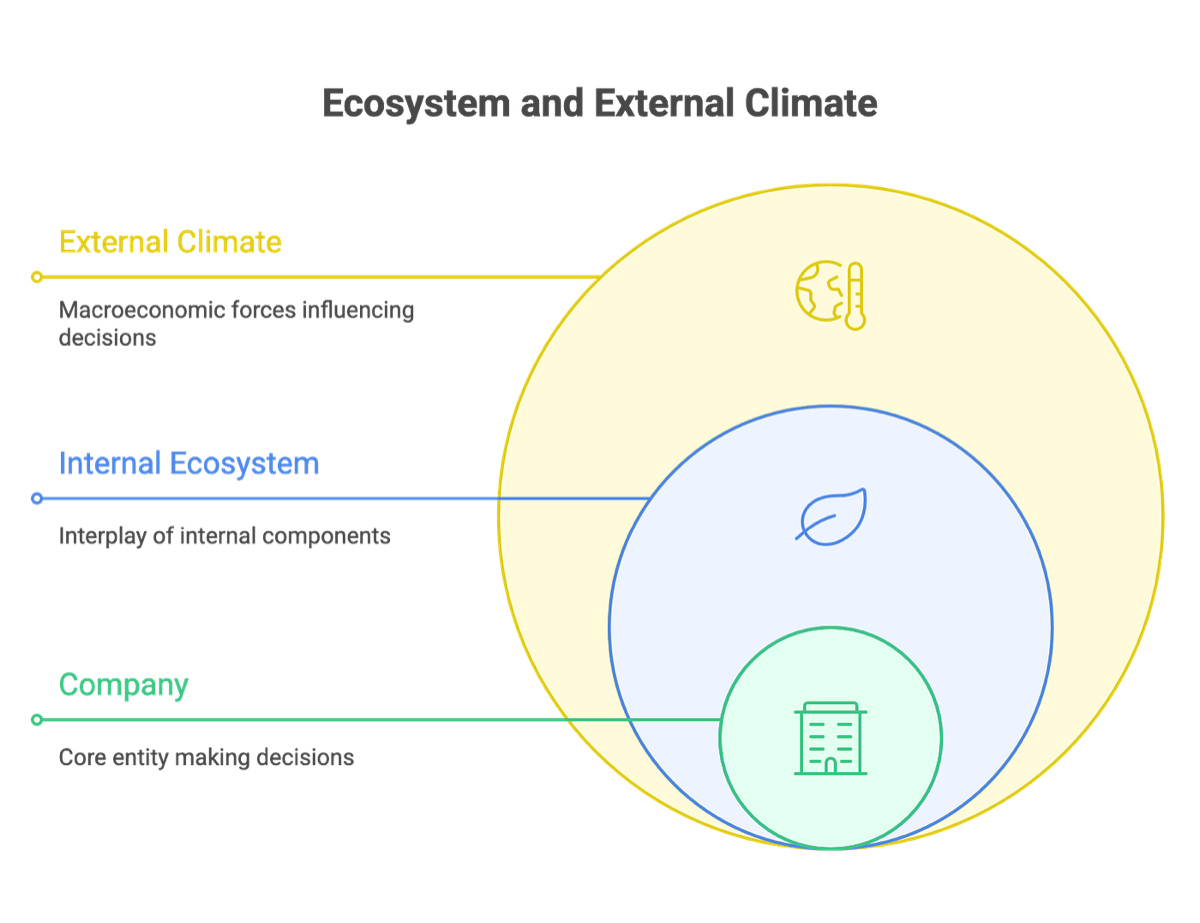
The Macro-Environment as a Forcing Function
The strategic game of balancing Capex and Opex is heavily influenced by the cost and availability of a critical resource: capital. Just as rainfall dictates the growth strategy of an ecosystem, the flow of money dictates the growth strategy of an economy.
- The Zero-Interest Rate Policy (ZIRP) Era (The “Rainy Season”): In the 2010s, with capital being abundant and cheap, the climate encouraged massive Capex-dominant strategies. Investors rewarded stories of growth-at-all-costs.
Example: Meta exemplifies this era. Fueled by cheap capital, they made enormous Capex bets, spending billions to build a global network of data centers, acquiring foundational assets like Instagram and WhatsApp, and pouring over $10 billion annually into Reality Labs — a massive capitalized project to build the Metaverse. - The High-Interest Rate Era (The “Drought”): When capital becomes expensive, the focus violently shifts to efficiency and profitability, mandating Opex-dominant strategies. The game is no longer about planting new forests; it’s about surviving the drought by efficiently managing existing resources.
Example: Meta’s “Year of Efficiency” in 2023, along with similar mass layoffs at Amazon and Google, are direct responses to this climate shift. The goal became aggressive Opex optimization — reducing headcount, cutting projects, and consolidating infrastructure to maximize profitability from the assets built during the “rainy season.”
Corporate Governance: The Internal Climate System
While the macro-environment is the external weather, a company’s governance and incentive structures create its internal climate. Executive decisions on Capex and Opex are a direct reflection of what the board and shareholders choose to reward.
- Incentivizing Growth: When executive compensation is tied heavily to top-line revenue growth, leaders are biased toward large Capex investments and aggressive hiring.
Example: For years, Salesforce’s primary narrative was relentless revenue growth. This was fueled by a series of massive Capex-through-acquisition deals, such as buying Slack for $27.7 billion and Tableau for $15.7 billion, which expanded their empire and met growth-oriented investor expectations. - Incentivizing Efficiency: When incentives are tied to profitability metrics like EBITDA or Free Cash Flow, leaders are forced to scrutinize every operational cost, promoting Opex discipline.
Example: Apple under Tim Cook is a masterclass in this. While still investing heavily in R&D (Capex), the company is renowned for its operational excellence. By meticulously managing its supply chain and other operational costs (Opex), Apple generates staggering free cash flow, a key metric that rewards efficiency and is highly prized by its investors.
The Next Frontier: AI’s Impact on the Equation
The rise of generative AI represents a fundamental climate shift, creating entirely new geological features on the business landscape and radically redefining the nature of digital assets.
- AI Training as the New Capex: The cost of training a foundational model is a monumental upfront investment in creating a proprietary digital asset.
Example: Microsoft’s $10+ billion investment in OpenAI is a quintessential 21st-century Capex deal, securing access to a foundational AI asset. Likewise, Google’s internal development of models like Gemini represents an enormous capitalized project, leveraging thousands of engineers and vast computational resources. - AI Inference as the New Opex: The cost of running these models is a significant and variable operational expense.
Example: Companies like Duolingo (for its “Max” tutor) and Shopify (for its “Magic” features) are not making the massive Capex investment. Instead, they pay OpenAI a recurring, usage-based fee for every API call. Their AI cost is a classic Opex that scales directly with user engagement.
Conclusion: From Architect to Meteorologist
Our journey through software economics is now complete. We’ve seen that leaders must first learn to be architects (101), building with clearly defined components. They must then evolve into ecologists (201), managing the dynamic interplay within their system.
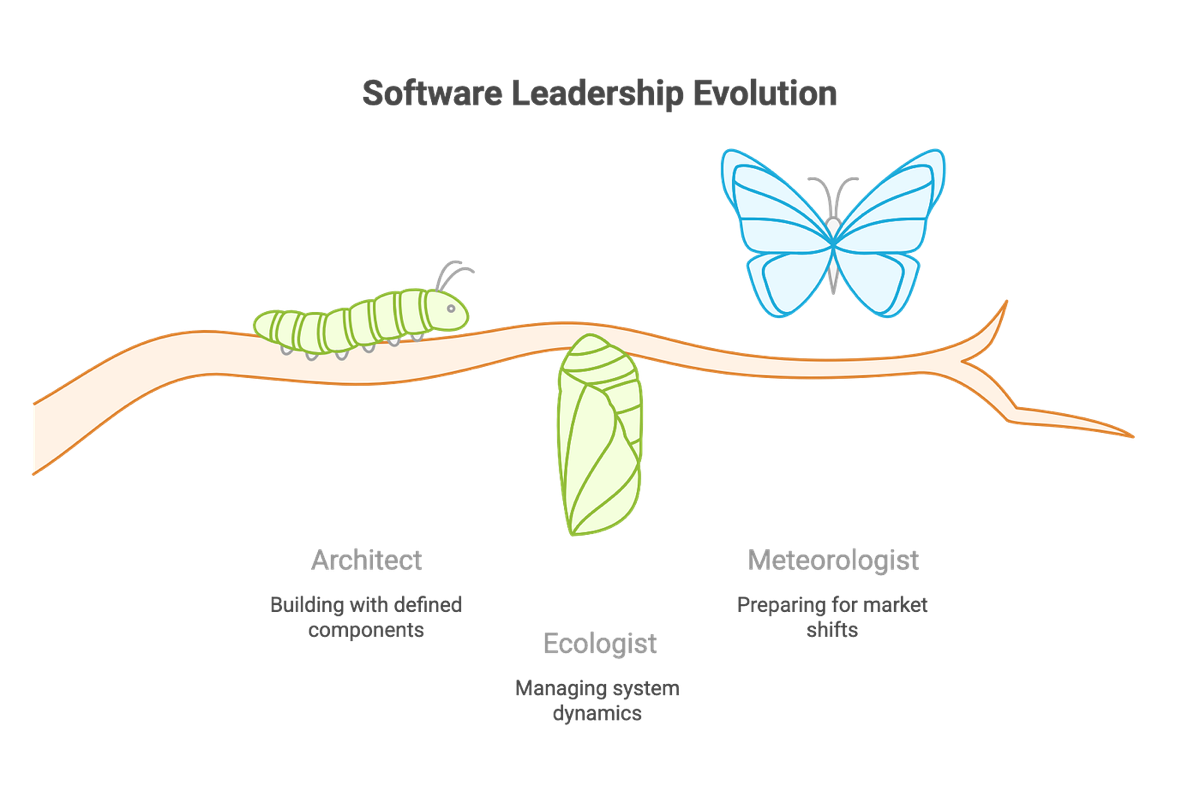
Finally, at the highest level, they must become meteorologists (301). A 301-level leader understands that their carefully cultivated ecosystem is constantly battered by the winds of monetary policy, the storms of market sentiment, and the long-term climate shifts of technological revolution. Their ultimate responsibility is not to control the weather — for that is impossible — but to possess the wisdom to read the signs and the courage to prepare their organization not just for the season ahead, but for the new climate that is to come.